Finding the best red dot for shotgun use is different from picking a red dot for a pistol or AR. A shotgun hits harder, recoils differently, and is often used in fast, awkward positions where I need a sight picture immediately. Whether I’m patterning buckshot, shooting slugs, hunting turkeys, or setting up a defensive shotgun, the optic has to stay mounted, hold zero, and give me a clean aiming point without slowing me down.
For 2026, I’m looking for rugged construction, reliable brightness controls, practical mounting options, and a reticle that works well on a shotgun’s natural point-shooting style. I also prefer optics that are not overly bulky, because shotguns already carry weight forward and can feel clumsy with oversized accessories.
After comparing the options, my top overall pick is the Aimpoint Micro T-2 because it balances durability, battery life, low weight, and shotgun-ready performance better than anything else I’ve used.
Quick Summary
My favorite shotgun red dot overall is the Aimpoint Micro T-2 because it is compact, extremely rugged, and easy to trust under recoil. The Trijicon RMR Type 2 is my top pick for a low-profile receiver-mounted setup, while the HOLOSUN 507C-X2 gives me the most reticle flexibility for the money. For a defensive shotgun, I like the enclosed HOLOSUN 509T. For budget builds, the Vortex Crossfire is hard to ignore. If I’m building a turkey or slug shotgun and want a big, fast viewing window, the HOLOSUN 510C makes a lot of sense.
Top Product List
Aimpoint Micro T-2 - Best for overall shotgun use
Trijicon RMR Type 2 - Best for low-profile shotgun mounting
HOLOSUN 507C-X2 - Best for reticle versatility
HOLOSUN 509T - Best for enclosed-emitter durability
HOLOSUN 510C - Best for turkey and slug shotguns
Vortex Crossfire - Best budget red dot for shotgun
Best Red Dot for Shotgun: Top 6 Picks for 2026
Aimpoint Micro T-2
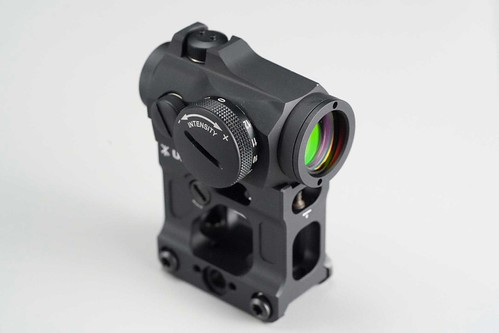
The Aimpoint Micro T-2 is the red dot I trust most when recoil, weather, and hard use matter. On a shotgun, I want a dot that disappears into the gun instead of feeling like a fragile accessory, and the Micro T-2 does that extremely well.
- Dot size: 2 MOA
- Sight type: Compact enclosed red dot
- Best use: Defensive shotguns, slug guns, hunting shotguns
- Battery type: CR2032
- Housing style: Enclosed tube
- Mounting style: Micro-pattern mount
Pros
- Excellent durability under shotgun recoil
- Very compact and lightweight
- Long battery life
- Clear dot with practical brightness settings
- Strong all-weather performance
Cons
- Expensive
- Requires the right mount or rail setup
- 2 MOA dot may look small to shooters who prefer a larger aiming point
My personal experience with the product
The Aimpoint Micro T-2 feels almost purpose-built for a serious shotgun. I like it because it keeps the gun lively and does not add a bulky window or oversized hood above the receiver. When I shoulder the shotgun quickly, the dot appears naturally as long as my mount height is right. I also appreciate that the 2 MOA dot gives me enough precision for slugs without feeling too fine for buckshot.
Summary of online customer feedback
Most customer feedback praises the Micro T-2 for its ruggedness, battery life, and dependable zero retention. The main complaint is price, and I agree that it costs more than many shooters want to spend. Still, people who buy it usually seem to view it as a long-term optic rather than a temporary upgrade.
Mounting explanation
The Aimpoint Micro T-2 does not mount directly to most shotgun receivers by itself. It uses the Aimpoint Micro footprint, so it typically requires a Picatinny rail mount, a dedicated shotgun optic mount, or a receiver adapter made for the specific shotgun. On shotguns with a factory Picatinny rail, it can be mounted with the proper Micro-compatible rail mount.
➤➤➤ Click Here to Check Price on Amazon
➤➤➤ Click Here to Check Price on OpticsPlanet
➤➤➤ Click Here to Check Price on EuroOptic
Trijicon RMR Type 2
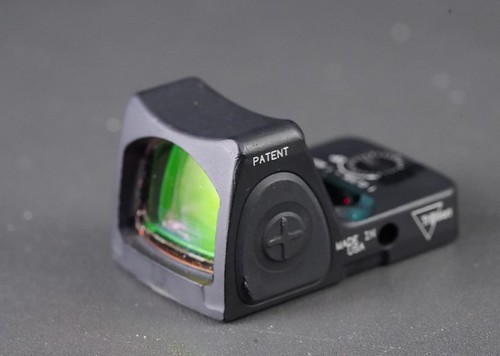
The Trijicon RMR Type 2 is my favorite low-profile shotgun red dot when I want the optic mounted close to the receiver. It is small, tough, and proven on hard-recoiling platforms.
- Dot size: Commonly available in multiple MOA options
- Sight type: Open-emitter reflex sight
- Best use: Defensive shotguns, tactical shotguns, turkey guns
- Battery type: CR2032
- Housing style: Forged-style compact reflex body
- Mounting style: RMR footprint
Pros
- Extremely rugged for its size
- Low-profile design works well on shotguns
- Wide aftermarket mount support
- Good for fast close-range shooting
- Strong reputation for recoil resistance
Cons
- Open emitter can collect debris
- Battery access depends on model and setup
- Smaller window than larger reflex sights
My personal experience with the product
I like the RMR Type 2 most on shotguns where I want a clean, compact setup. It does not make the gun feel top-heavy, and it keeps my cheek weld more natural than many taller tube-style optics. I find it especially useful on defensive shotguns and turkey guns where a lower receiver-mounted optic keeps the whole package streamlined.
Summary of online customer feedback
Customer feedback usually focuses on the RMR’s toughness and reliability. Many users like how well it holds zero on pistols, rifles, and shotguns. The most common criticisms are the smaller viewing window and the fact that an open emitter can be affected by mud, snow, lint, or heavy rain.
Mounting explanation
The Trijicon RMR Type 2 uses the RMR footprint. It usually requires a shotgun-specific mounting plate, a drilled-and-tapped receiver rail with an RMR adapter, or a saddle-style mount depending on the shotgun. It does not mount directly to a plain shotgun receiver without a compatible plate or mount.
➤➤➤ Click Here to Check Price on Amazon
➤➤➤ Click Here to Check Price on OpticsPlanet
➤➤➤ Click Here to Check Price on EuroOptic
HOLOSUN 507C-X2
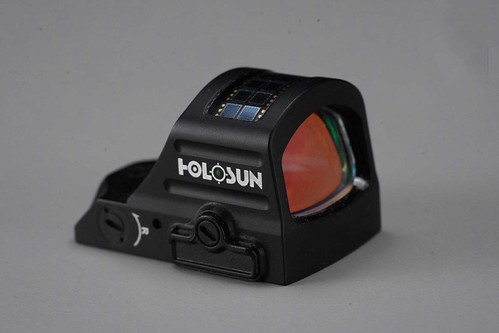
The HOLOSUN 507C-X2 is my pick when I want one optic that can adapt to different shotgun roles. The multiple-reticle system is the main reason I like it on a shotgun, because a circle-dot can be very fast on close targets.
- Reticle: Multi-reticle system
- Sight type: Open-emitter reflex sight
- Best use: Turkey hunting, home defense, range use
- Battery type: CR1632
- Housing style: Compact reflex
- Mounting style: RMR-style footprint
Pros
- Circle-dot reticle is fast on shotgun targets
- Good value for the feature set
- Solar backup on many versions
- Side battery tray
- Works with common RMR-pattern mounts
Cons
- Open emitter is less protected than enclosed designs
- More settings than some shooters need
- Requires a compatible mount or plate
My personal experience with the product
The 507C-X2 makes sense to me on a shotgun because the circle-dot reticle is easy to pick up when moving quickly. For buckshot at close range, I like having a bold visual reference rather than only a tiny dot. When shooting slugs, I can still use the center dot with enough precision for practical distances.
Summary of online customer feedback
Most online customer feedback is positive about the reticle choices, battery access, brightness range, and overall value. Some users prefer enclosed emitters for harsh outdoor use, but many still like the 507C-X2 because it gives a lot of performance without jumping into premium pricing.
Mounting explanation
The HOLOSUN 507C-X2 uses an RMR-style footprint. It will not usually mount directly to a shotgun receiver unless the shotgun or optic cut is already compatible. Most setups require an RMR adapter plate, a Picatinny rail adapter, or a shotgun-specific mount.
➤➤➤ Click Here to Check Price on Amazon
➤➤➤ Click Here to Check Price on OpticsPlanet
➤➤➤ Click Here to Check Price on EuroOptic
HOLOSUN 509T
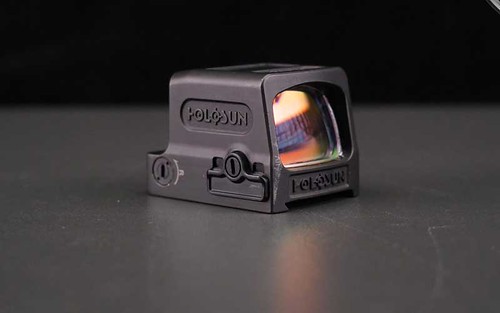
The HOLOSUN 509T is the shotgun red dot I would choose when I want an enclosed emitter without spending Aimpoint money. It gives me a protected sighting system in a compact package.
- Reticle: Multi-reticle system
- Sight type: Enclosed-emitter reflex sight
- Best use: Defensive shotguns, harsh-weather hunting
- Battery type: CR1632
- Housing style: Enclosed reflex
- Mounting style: 509T footprint with adapter options
Pros
- Enclosed emitter resists rain, debris, and lint
- Strong housing design
- Useful reticle options
- Good size for shotgun receivers
- Better weather protection than open reflex sights
Cons
- Mounting can be more complicated
- Window is not as large as some open reflex sights
- Slightly bulkier than an RMR-style open optic
My personal experience with the product
The 509T gives me confidence on a shotgun because the emitter is protected. On a home-defense shotgun or a field gun that might see rain, dust, or brush, that matters. I also like that it still feels compact enough for receiver mounting and does not turn the shotgun into a heavy, optic-stacked setup.
Summary of online customer feedback
Customer feedback often highlights the enclosed design, solid build, and practical reticle system. Some buyers mention that mounting takes more planning than an RMR-footprint optic, but many feel the enclosed emitter is worth that tradeoff.
Mounting explanation
The HOLOSUN 509T uses its own 509T footprint. It generally requires a dedicated 509T adapter, a compatible plate, or a Picatinny mount. It does not directly fit standard RMR cuts without an adapter, so shotgun owners should confirm the mounting system before buying.
➤➤➤ Click Here to Check Price on Amazon
➤➤➤ Click Here to Check Price on OpticsPlanet
➤➤➤ Click Here to Check Price on EuroOptic
HOLOSUN 510C
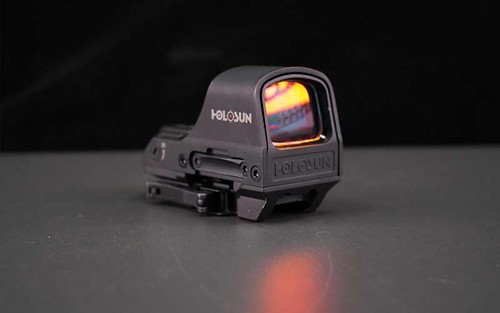
The HOLOSUN 510C is my favorite pick when I want a large window and fast acquisition on a shotgun. It is bigger than a micro reflex sight, but that big viewing area can be excellent for turkey hunting, slug work, and range drills.
- Reticle: Multi-reticle system
- Sight type: Open reflex sight
- Best use: Turkey shotguns, slug guns, range shotguns
- Battery type: CR1632
- Housing style: Open reflex with protective frame
- Mounting style: Picatinny-style mount
Pros
- Large window is very fast
- Circle-dot reticle works well for shotguns
- Good controls and visibility
- Great for turkey loads and slugs
- Easy to mount on railed shotguns
Cons
- Larger than pistol-style reflex sights
- Open design is less sealed than enclosed optics
- May sit higher than some shooters prefer
My personal experience with the product
The 510C is not the smallest optic here, but I really like it when speed matters more than a minimalist profile. On a shotgun with a rail, the large window makes it easy for me to find the reticle during fast mounts. For turkey hunting, I also like having a bold circle-dot aiming reference when my head position is not perfect.
Summary of online customer feedback
Online customer feedback usually praises the large viewing window, reticle options, and value. Some users think it is too large for compact defensive setups, but many shotgun and PCC shooters like how forgiving and fast it feels.
Mounting explanation
The HOLOSUN 510C is commonly used with a Picatinny-style mount. On a shotgun with a factory rail or installed receiver rail, it can mount directly to that rail. On a plain receiver, it requires a rail, saddle mount, or shotgun-specific mounting solution.
➤➤➤ Click Here to Check Price on Amazon
➤➤➤ Click Here to Check Price on OpticsPlanet
➤➤➤ Click Here to Check Price on EuroOptic
Vortex Crossfire
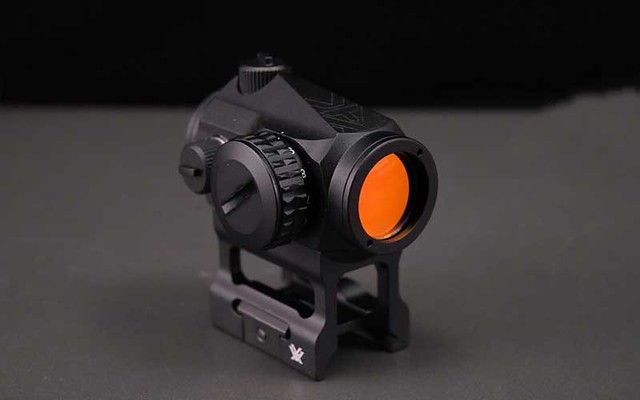
The Vortex Crossfire is my budget pick for shotgun owners who want a simple, functional red dot without spending premium money. It is not as refined as the Aimpoint Micro T-2, but it gives me a practical aiming solution for range use, hunting, and general shotgun setup work.
- Dot size: 2 MOA
- Sight type: Compact tube-style red dot
- Best use: Budget shotgun builds, range use, casual hunting
- Battery type: CR2032
- Housing style: Enclosed tube
- Mounting style: Picatinny mount
Pros
- Affordable
- Simple 2 MOA dot
- Enclosed tube design
- Easy to mount on a rail
- Good option for first-time shotgun red dot users
Cons
- Not as rugged as premium duty optics
- Fewer advanced features
- Mount height may need adjustment for ideal cheek weld
My personal experience with the product
I like the Crossfire for budget shotgun builds because it keeps things simple. The dot is easy to understand, the controls are straightforward, and it works well when mounted on a receiver rail. I would not choose it over an Aimpoint for a hard-use defensive shotgun, but for a practical range or hunting setup, it offers a lot for the money.
Summary of online customer feedback
Customer feedback is generally strong for value, ease of use, and basic reliability. Some buyers compare it to much more expensive optics and notice the difference in refinement, but many still like it because it provides a usable red dot experience at a lower cost.
Mounting explanation
The Vortex Crossfire typically mounts to a Picatinny rail. If the shotgun already has a rail, it can mount directly with the included or compatible rail mount. If the shotgun has a plain receiver, it will require a rail, saddle mount, or drilled-and-tapped receiver setup.
➤➤➤ Click Here to Check Price on Amazon
➤➤➤ Click Here to Check Price on OpticsPlanet
➤➤➤ Click Here to Check Price on EuroOptic
How to Choose the Right Red Dot Sight
Choosing the right shotgun red dot starts with the shotgun’s purpose. For a defensive shotgun, I want durability, simple controls, strong battery life, and an optic that stays clean and visible under stress. That pushes me toward the Aimpoint Micro T-2 or HOLOSUN 509T.
For turkey hunting, I care more about reticle visibility, awkward shooting positions, and a clear aiming point with tight patterns. A circle-dot reticle can help a lot here, which is why I like the HOLOSUN 507C-X2 and HOLOSUN 510C.
For slug shooting, I prefer a smaller dot because it gives me more precision at distance. A 2 MOA dot like the Aimpoint Micro T-2 or Vortex Crossfire works well for that. For buckshot-only defensive use, a larger or circle-dot style reticle can feel faster.
Mounting is just as important as the optic itself. Shotguns recoil hard, and a weak mount can ruin a good red dot. I always check whether my shotgun has a factory rail, a drilled-and-tapped receiver, or a dedicated optic-cut mount available. A low mount is usually better because it helps preserve cheek weld. If the optic sits too high, I may need a cheek riser to keep my eye naturally aligned with the dot.
I also think about emitter style. Open-emitter reflex sights are lighter and often sit lower, but they can collect water, dust, or debris. Enclosed optics protect the emitter better, which is why I prefer enclosed designs for defensive guns and rough-weather use.
Finally, I look at brightness range. A shotgun red dot should be bright enough for daylight hunting but dim enough for indoor defensive use. Controls should be easy to use, but I do not want a complicated setup on a shotgun that may be used quickly.
FAQs
Is a red dot worth it on a shotgun?
Yes, I think a red dot is worth it on a shotgun if you use slugs, tight turkey patterns, buckshot at varying distances, or a defensive setup. It gives me a precise aiming point and helps reduce guesswork compared with only a bead sight.
What size dot is best for a shotgun?
For most shotgun use, I like a 2 MOA to 6 MOA dot. A 2 MOA dot is better for slugs and more precise aiming, while a larger dot or circle-dot reticle can be faster for buckshot and close-range shooting.
Should I use an open or enclosed red dot on a shotgun?
For harsh weather or defensive use, I prefer an enclosed red dot because the emitter is protected. For a lighter, lower-profile hunting or range setup, an open reflex sight can still work very well.
Can a shotgun recoil damage a red dot?
Yes, shotgun recoil can damage weak optics or poor mounts. That is why I choose proven red dots and solid mounting hardware. The optic itself matters, but the mount is just as important.
Where should a red dot be mounted on a shotgun?
I usually prefer mounting a red dot low on the receiver because it keeps the sight close to my natural cheek weld. A receiver rail, dedicated optic plate, or saddle mount can work as long as it is secure and holds zero.
Conclusion
The Aimpoint Micro T-2 is my strongest overall choice for the best red dot for shotgun use in 2026. It is compact, durable, reliable, and easy to trust on a hard-recoiling firearm. If I wanted a lower-profile reflex setup, I would choose the Trijicon RMR Type 2. For reticle flexibility, the HOLOSUN 507C-X2 is excellent, while the HOLOSUN 509T is my pick for an enclosed-emitter defensive shotgun. The HOLOSUN 510C is the fastest big-window option for turkey and slug guns, and the Vortex Crossfire is the best budget-friendly choice.
For my own shotgun, I would spend the extra money on the Aimpoint Micro T-2 if reliability mattered most. But for hunters, range shooters, and home-defense builds, all six of these optics can make a shotgun faster, more precise, and easier to run.