The Canik TP9 Elite Combat is one of those pistols that feels like it was built to run a red dot. The trigger is crisp, the slide is optics-ready, and the gun has enough weight and grip texture to stay controllable when I start pushing speed. For me, the best red dot for Canik TP9 Elite Combat needs to do three things well: hold zero, present the dot quickly, and fit the pistol without turning it into a bulky mess.
I prefer a pistol optic that balances durability with a clean sight picture. On the Elite Combat, I also pay close attention to footprint compatibility because some optics mount with the factory plate system while others need the correct adapter plate. After testing and comparing common pistol dots, these are the six I would trust most on this Canik.
Quick Summary
My top overall pick is the Trijicon RMR Type 2 because it is rugged, proven, and perfectly suited for a hard-use Canik TP9 Elite Combat setup. The HOLOSUN 507C-X2 is my favorite value-performance option because the reticle system is fast and forgiving. The HOLOSUN 508T is the best durability-focused Holosun, while the HOLOSUN 407C-X3 keeps things simple with a clean dot. The Leupold Deltapoint Pro gives the biggest, easiest window, and the Vortex Venom is a strong budget-friendly option for range and competition use.
Top Product List
Trijicon RMR Type 2 - Best for overall durability
HOLOSUN 507C-X2 - Best for multi-reticle versatility
HOLOSUN 508T - Best for rugged Holosun performance
HOLOSUN 407C-X3 - Best for simple dot shooting
Leupold Deltapoint Pro - Best for large window acquisition
Vortex Venom - Best for budget range use
Best Red Dot for Canik Tp9 Elite Combat: Top 6 Picks for 2026
Trijicon RMR Type 2
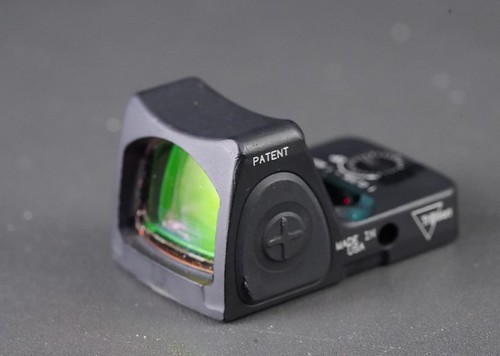
The Trijicon RMR Type 2 is my first choice when I want a no-excuses optic on the Canik TP9 Elite Combat. It is compact, tough, and built around a design that has earned a serious reputation on duty pistols, competition pistols, and defensive handguns.
- Open-emitter reflex sight
- Common RMR footprint
- Adjustable LED brightness
- Aluminum housing
- Compact pistol-friendly profile
- Designed for heavy recoil and hard use
Pros
- Extremely durable housing
- Excellent track record
- Compact enough for carry or duty-style setups
- Bright, crisp aiming point
- Holds zero well when mounted correctly
Cons
- Smaller window than some newer competition optics
- Battery access is not as convenient as top-loading designs
- Premium price
My personal experience with the RMR Type 2 has been simple: it is the optic I trust when I do not want to think about the optic. On the TP9 Elite Combat, the dot tracks predictably through recoil, and the low-profile body does not make the pistol feel top-heavy. I especially like it for defensive drills because the optic feels rugged enough to rack off a belt, barricade, or bench without making me nervous.
Online customer feedback usually centers on the same strengths I noticed: toughness, reliability, and long-term zero retention. Some shooters complain about the window size compared with larger optics, but most still respect the RMR Type 2 as one of the safest premium choices for a serious pistol build.
For mounting, the Trijicon RMR Type 2 uses the RMR footprint. On the Canik TP9 Elite Combat, it typically mounts using the correct Canik optic plate rather than directly to the slide. I would confirm the plate number included with my pistol and use the proper screws with thread locker.
➤➤➤ Click Here to Check Price on Amazon
➤➤➤ Click Here to Check Price on OpticsPlanet
➤➤➤ Click Here to Check Price on EuroOptic
HOLOSUN 507C-X2
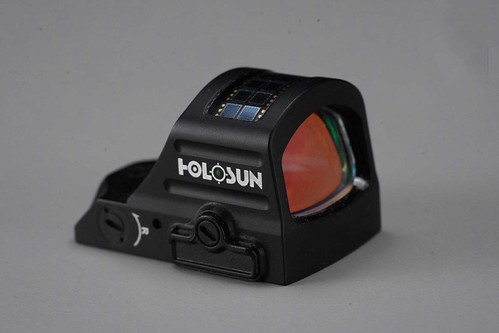
The HOLOSUN 507C-X2 is the red dot I recommend most often to shooters who want features without jumping into the highest price tier. On the TP9 Elite Combat, it gives me a fast reticle, good controls, and a practical size that works well for range, defensive, and competition practice.
- Open-emitter reflex sight
- RMR-style footprint
- Multiple reticle system
- Solar backup capability
- Side battery tray
- Shake-awake style activation
Pros
- Multi-reticle setup is very fast
- Excellent value for the feature set
- Side battery access is convenient
- Good window size for a pistol optic
- Works well for new red dot shooters
Cons
- Not as battle-proven as the RMR
- Open emitter can collect lint or debris
- Reticle options may feel busy to some shooters
My personal experience with the 507C-X2 on pistols has been very positive. I like the circle-dot reticle when I am working from the holster because it helps me find the sight picture quickly. On the Canik TP9 Elite Combat, that matters because the trigger encourages fast splits, and the larger reticle helps me recover the dot when I get aggressive.
Customer feedback is generally strong for the 507C-X2. Shooters often praise the value, reticle flexibility, and battery system. The most common criticism I see is that some users prefer a simpler single dot, but that is easy to solve by changing reticle mode.
For mounting, the HOLOSUN 507C-X2 uses an RMR-style footprint. On the Canik TP9 Elite Combat, it normally requires the compatible Canik mounting plate rather than direct slide mounting. I would use the correct plate, verify screw length, and recheck torque after the first range session.
➤➤➤ Click Here to Check Price on Amazon
➤➤➤ Click Here to Check Price on OpticsPlanet
➤➤➤ Click Here to Check Price on EuroOptic
HOLOSUN 508T
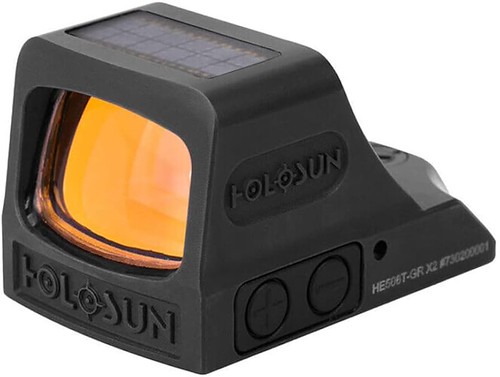
The HOLOSUN 508T is my pick when I want Holosun features in a tougher package. It feels like a more robust upgrade over the standard 507C-style setup, especially for shooters who train hard or want a more confidence-inspiring housing.
- Open-emitter reflex sight
- RMR-style footprint
- Titanium-style rugged housing design
- Multiple reticle system
- Solar backup capability
- Side-mounted battery access
Pros
- Stronger housing than many budget pistol dots
- Excellent reticle options
- Good battery convenience
- Fast sight picture
- Great fit for hard range use
Cons
- Costs more than the 407C and 507C
- Still an open-emitter optic
- Slightly more than some casual shooters need
I like the 508T on the Elite Combat because it matches the pistol’s performance personality. The Canik is accurate, fast, and easy to shoot, and the 508T gives me a durable optic without losing the flexible Holosun reticle system. During rapid strings, the reticle is easy for me to pick back up as the slide returns.
Online customer feedback commonly highlights the optic’s durability, reticle options, and value compared with ultra-premium pistol dots. Some shooters choose it specifically because they want something tougher than a basic range optic but still want Holosun’s modern features.
For mounting, the HOLOSUN 508T uses an RMR-style footprint. On the Canik TP9 Elite Combat, it generally mounts with the correct factory or aftermarket RMR-compatible plate, not directly to the slide. Proper screw fit matters because overly long screws can cause problems on pistol optic installations.
➤➤➤ Click Here to Check Price on Amazon
➤➤➤ Click Here to Check Price on OpticsPlanet
➤➤➤ Click Here to Check Price on EuroOptic
HOLOSUN 407C-X3
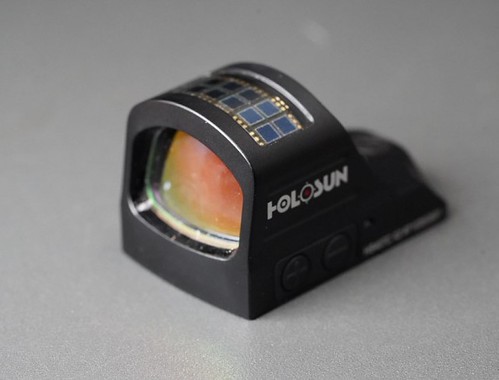
The HOLOSUN 407C-X3 is the optic I would choose if I wanted a clean, simple dot without paying for reticle options I might not use. It keeps the same general pistol-friendly format that works well on the Canik TP9 Elite Combat, but it feels more straightforward.
- Open-emitter reflex sight
- RMR-style footprint
- Simple dot reticle
- Solar backup capability
- Side battery access
- Adjustable brightness settings
Pros
- Simple and easy to use
- Usually more affordable than multi-reticle models
- Good battery access
- Solid window size
- Great for range training
Cons
- No circle-dot reticle flexibility
- Not as rugged as some premium options
- Open-emitter design needs occasional cleaning
My personal experience with single-dot optics is that they force me to focus on fundamentals. On the TP9 Elite Combat, the 407C-X3 gives me a clean sight picture for accuracy work, steel shooting, and general range drills. I do not get distracted by reticle choices, and I like that simplicity.
Customer feedback for the 407C line is usually strongest around value and ease of use. Many shooters like that it delivers core Holosun features without the extra cost of the 507C’s multi-reticle system. The main complaint is predictable: some buyers later wish they had chosen the 507C for the circle-dot option.
For mounting, the HOLOSUN 407C-X3 uses an RMR-style footprint. On the Canik TP9 Elite Combat, it normally requires the appropriate Canik adapter plate. I would mount it with the plate that matches the RMR pattern and confirm that the optic sits flat before tightening everything down.
➤➤➤ Click Here to Check Price on Amazon
➤➤➤ Click Here to Check Price on OpticsPlanet
➤➤➤ Click Here to Check Price on EuroOptic
Leupold Deltapoint Pro
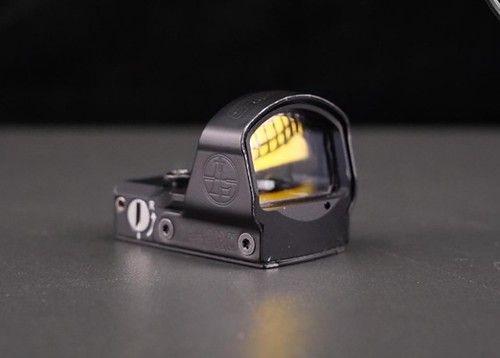
The Leupold Deltapoint Pro is the optic I like when speed and window size matter most. It gives the Canik TP9 Elite Combat a very open sight picture, which can be a big advantage for competition-style shooting or for anyone still learning to track the dot.
- Open-emitter reflex sight
- DeltaPoint Pro footprint
- Large viewing window
- Motion-sensing activation
- Aluminum housing
- Top-access battery design
Pros
- Large window is easy to find
- Excellent for fast target transitions
- Top battery access is convenient
- Clear glass
- Comfortable for competition-style shooting
Cons
- Taller than some compact pistol dots
- Requires the correct mounting plate
- Not as compact as the RMR
My personal experience with the Deltapoint Pro is that it feels forgiving. When my draw is slightly imperfect, the bigger window helps me recover the dot faster. On the Elite Combat, that makes the pistol feel very natural for USPSA-style drills, plate racks, and quick target transitions.
Online customer feedback often praises the Deltapoint Pro for its big window and easy battery access. Some shooters mention that it sits taller than smaller optics, which can affect backup iron sight choices. For my use, that tradeoff is worth it when speed is the priority.
For mounting, the Leupold Deltapoint Pro does not use the RMR footprint. On the Canik TP9 Elite Combat, it requires the correct DeltaPoint Pro-compatible mounting plate or adapter. I would not try to force it onto an RMR plate; the footprint needs to match.
➤➤➤ Click Here to Check Price on Amazon
➤➤➤ Click Here to Check Price on OpticsPlanet
➤➤➤ Click Here to Check Price on EuroOptic
Vortex Venom
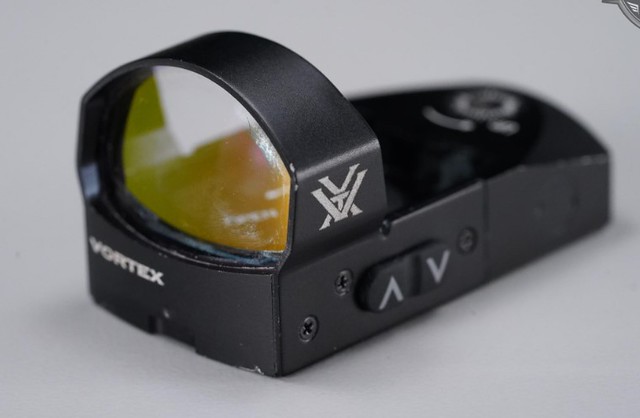
The Vortex Venom is my budget-friendly pick for the Canik TP9 Elite Combat. It is not the optic I would choose for the roughest duty setup, but for range use, casual competition, and general red dot practice, it gives a lot of performance for the money.
- Open-emitter reflex sight
- Vortex/Burris-style footprint
- Compact reflex design
- Top-load battery
- Adjustable brightness
- Lightweight pistol optic body
Pros
- Good value
- Top battery access
- Lightweight feel
- Easy to use
- Nice option for range pistols
Cons
- Not as rugged as the RMR or 508T
- Different footprint than RMR optics
- Less ideal for severe hard-use carry
I have always viewed the Venom as a practical range optic. On the TP9 Elite Combat, it keeps the pistol light and fast, and the dot is easy enough to pick up during normal drills. I would choose it for a shooter who wants to learn pistol dots without spending premium money immediately.
Customer feedback tends to focus on the Venom’s value, simple controls, and good warranty reputation. The biggest criticism is durability compared with higher-end pistol optics. That matches my view: it is a strong range and competition practice dot, but not my first pick for maximum abuse.
For mounting, the Vortex Venom uses a different footprint than the Trijicon RMR pattern. On the Canik TP9 Elite Combat, it usually requires the compatible plate for the Venom/Docter-style footprint. It does not mount directly unless the slide or plate is specifically cut for that footprint.
➤➤➤ Click Here to Check Price on Amazon
➤➤➤ Click Here to Check Price on OpticsPlanet
➤➤➤ Click Here to Check Price on EuroOptic
How to Choose the Right Red Dot Sight
For the Canik TP9 Elite Combat, I start with footprint compatibility. The pistol is optics-ready, but that does not mean every optic mounts directly. Most full-size pistol dots need the correct plate. RMR-footprint optics like the Trijicon RMR Type 2, HOLOSUN 507C-X2, HOLOSUN 508T, and HOLOSUN 407C-X3 are easy recommendations because that footprint is common and well supported.
Next, I look at durability. If I am setting up the pistol for defensive use, I want the Trijicon RMR Type 2 or HOLOSUN 508T. If the pistol is mostly for the range, I am more comfortable choosing the Vortex Venom or Leupold Deltapoint Pro.
Window size also matters. A bigger window, like the Deltapoint Pro, helps me find the dot faster during draws and transitions. A smaller rugged optic, like the RMR, carries better and feels more protected.
Reticle style is another key choice. A simple dot is clean and precise, while a circle-dot reticle can help newer dot shooters find the aiming point quickly. That is why I like the HOLOSUN 507C-X2 so much for this pistol.
Finally, I care about battery access. Top or side battery designs are more convenient because I do not have to remove the optic as often. Still, I would rather have a rugged optic with slightly less convenient battery access than a fragile optic that is easy to service.
FAQs
What red dot footprint works best on the Canik TP9 Elite Combat?
I prefer RMR-footprint optics on the Canik TP9 Elite Combat because they give me the most useful mix of durability, options, and plate availability. The Trijicon RMR Type 2, HOLOSUN 507C-X2, HOLOSUN 508T, and HOLOSUN 407C-X3 are all strong choices.
Does the Trijicon RMR Type 2 mount directly to the Canik TP9 Elite Combat?
In most setups, it mounts with the correct Canik optic plate rather than directly to the slide. I would always verify the plate, screw length, and torque before firing.
Is the HOLOSUN 507C-X2 better than the 407C-X3?
For me, the 507C-X2 is better if I want reticle flexibility, especially the circle-dot option. The 407C-X3 is better if I want a simpler and usually more affordable single-dot setup.
Is the Vortex Venom good enough for the Canik TP9 Elite Combat?
Yes, for range use, practice, and casual competition. I would not pick it over the RMR Type 2 or 508T for a hard-use defensive build, but it is a good budget-friendly optic.
What is the best overall red dot for the Canik TP9 Elite Combat?
My best overall pick is the Trijicon RMR Type 2. It is rugged, compact, proven, and well suited to the Canik TP9 Elite Combat when mounted with the correct plate.
Conclusion
The best red dot for Canik TP9 Elite Combat depends on how I plan to use the pistol. For the strongest overall setup, I would choose the Trijicon RMR Type 2 because it has the durability and track record I want on a serious handgun. For the best feature-packed value, I would choose the HOLOSUN 507C-X2. For a tougher Holosun build, the HOLOSUN 508T makes the most sense. The HOLOSUN 407C-X3 is ideal for simple dot shooting, the Leupold Deltapoint Pro is excellent for a big-window speed setup, and the Vortex Venom is the best budget range option.