The Kimber Ultra Carry II is a short-slide, lightweight 1911 made for concealed carry, so I do not treat optic choice the same way I would on a full-size duty pistol. On this gun, the best red dot needs to be compact, tough, low-profile, and easy to pick up during a fast draw from concealment.
After running compact optics on carry pistols and working around the limitations of small 1911 slides, I prefer dots that keep the pistol balanced and do not add unnecessary bulk. For the Kimber Ultra Carry II, mounting is just as important as glass quality because most slides will need milling or an adapter plate unless the pistol has already been cut for a specific footprint.
Quick Summary
My top overall pick is the Trijicon RMRcc because it is rugged, slim, and purpose-built for concealed carry pistols. The HOLOSUN EPS CARRY is my favorite enclosed-emitter option, while the HOLOSUN 507K gives the best feature set for shooters who want multiple reticles. Budget-minded carriers should look closely at the HOLOSUN 407K-X2 or Vortex Defender CCW.
Top Product List
Trijicon RMRcc - Best for overall concealed carry durability
HOLOSUN EPS CARRY - Best for enclosed-emitter carry use
HOLOSUN 507K - Best for multi-reticle versatility
HOLOSUN 407K-X2 - Best value micro red dot
Shield Sights RMSc - Best ultra-slim profile
Vortex Defender CCW - Best for easy controls and warranty support
Best Red Dot for Kimber Ultra Carry II: Top 6 Picks for 2026
Trijicon RMRcc
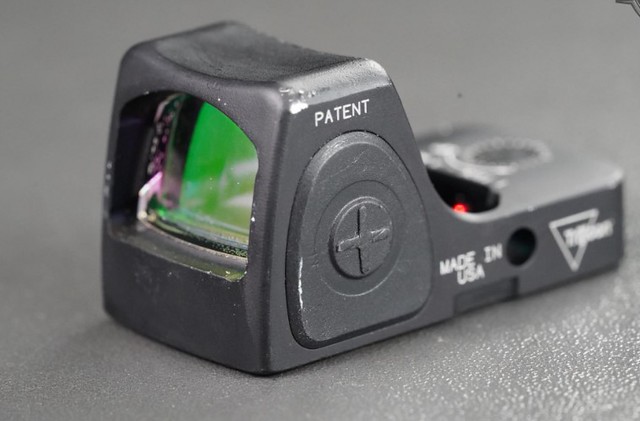
The Trijicon RMRcc is the optic I would choose first for a serious Kimber Ultra Carry II carry setup. It keeps the width reasonable, feels tough enough for daily use, and has the kind of simple, defensive-minded design I like on a compact 1911.
- Slim concealed-carry reflex sight
- Adjustable LED brightness
- Aluminum housing
- Battery-powered design
- Built for compact and subcompact pistols
Pros
- Excellent durability
- Narrow body suits compact slides
- Clean dot presentation
- Strong choice for daily carry
Cons
- Usually requires professional slide milling
- Not the cheapest option
- Smaller window than larger pistol optics
My personal experience with the RMRcc is that it feels like a true carry optic rather than a competition optic squeezed onto a carry gun. The window is not huge, but once I index the Kimber correctly, the dot appears consistently. I also like that it does not make a compact pistol feel top-heavy.
Online customer feedback is generally strongest around ruggedness, carry comfort, and confidence in the Trijicon name. The most common complaints tend to involve cost and the need for the correct mounting solution.
For mounting on a Kimber Ultra Carry II, the RMRcc usually does not mount directly to a standard 1911 slide. Most setups require the slide to be milled specifically for the RMRcc footprint or fitted with a compatible mounting plate by a gunsmith.
➤➤➤ Click Here to Check Price on Amazon
➤➤➤ Click Here to Check Price on OpticsPlanet
➤➤➤ Click Here to Check Price on EuroOptic
HOLOSUN EPS CARRY
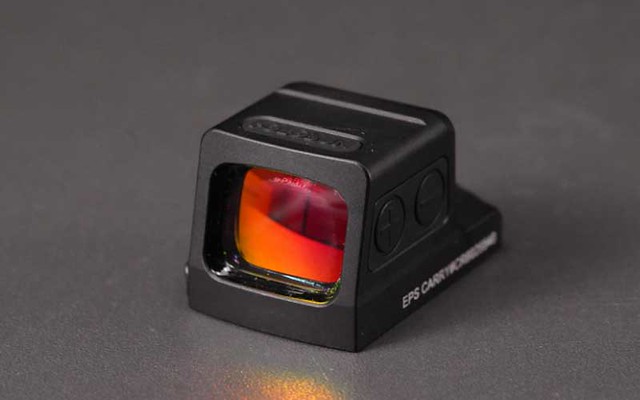
The HOLOSUN EPS CARRY is my favorite enclosed-emitter pick for the Kimber Ultra Carry II. I like it most for real-world carry because the closed design helps protect the emitter from lint, rain, dust, and debris.
- Enclosed-emitter micro red dot
- Compact carry-sized housing
- Shake Awake-style operation
- Side-access battery design
- Multiple brightness settings
Pros
- Enclosed emitter is excellent for carry
- Compact enough for a small pistol
- Good battery access
- Strong feature set for the price
Cons
- Slightly bulkier than open-emitter micro dots
- Requires the correct cut or plate
- May sit higher depending on mounting setup
My personal experience with enclosed optics is that they give me more peace of mind on a carry gun. With the EPS CARRY, I do not worry as much about lint or moisture blocking the dot when the pistol has been carried all day under a shirt.
Customer feedback often praises the EPS CARRY for its practical concealed-carry design, clear window, and dependable electronics. Some users mention that mounting height and plate selection matter a lot.
On the Kimber Ultra Carry II, the EPS CARRY will typically require a slide cut or adapter plate. It does not simply bolt onto an uncut Kimber slide. I would have the slide milled by a shop familiar with compact 1911 optics.
➤➤➤ Click Here to Check Price on Amazon
➤➤➤ Click Here to Check Price on OpticsPlanet
➤➤➤ Click Here to Check Price on EuroOptic
HOLOSUN 507K
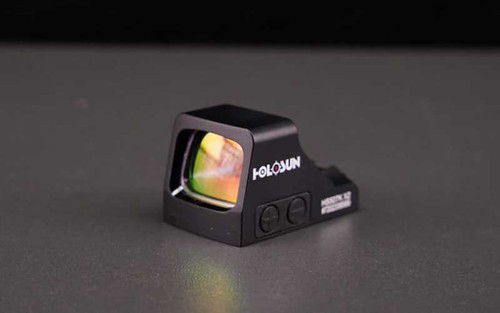
The HOLOSUN 507K is a strong match for shooters who want more reticle flexibility on the Kimber Ultra Carry II. I like it for people who are still building speed with a pistol dot because the larger circle-style reticle can be easier to find during presentation.
- Open-emitter micro reflex sight
- Compact pistol footprint
- Multi-reticle system
- Side battery tray
- Shake Awake-style feature
Pros
- Reticle options are useful
- Compact and lightweight
- Good value for features
- Easy battery access
Cons
- Open emitter can collect lint
- Requires proper mounting work
- Reticle system may be more than some users need
My personal experience with the 507K is that the circle-dot reticle helps during dry-fire and fast draw practice. On a short Kimber slide, I appreciate anything that helps me find the dot quickly without turning the gun into a bulky package.
Customer feedback is usually very positive about value, reticle choices, battery access, and carry-gun usability. Complaints usually focus on plate fitment, screw length, or learning the controls.
For mounting, the 507K generally requires a compatible optic cut or adapter plate. On a Kimber Ultra Carry II, I would not expect direct mounting unless the slide has already been cut for the correct Holosun K-style footprint.
➤➤➤ Click Here to Check Price on Amazon
➤➤➤ Click Here to Check Price on OpticsPlanet
➤➤➤ Click Here to Check Price on EuroOptic
HOLOSUN 407K-X2
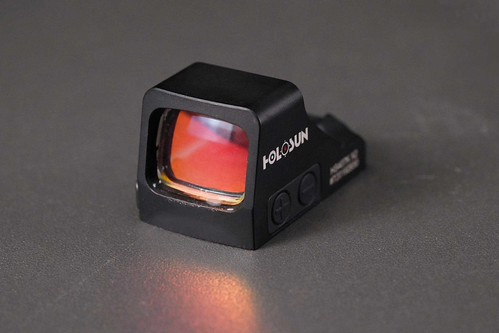
The HOLOSUN 407K-X2 is the simpler, value-focused alternative to the 507K. I like it for Kimber Ultra Carry II owners who want a dependable dot without paying extra for reticle options they may never use.
- Compact open-emitter red dot
- Simple dot reticle
- Side-loading battery
- Shake Awake-style operation
- Slim carry-friendly body
Pros
- Good price-to-performance ratio
- Simple dot is easy to use
- Compact size fits carry pistols well
- Battery tray is convenient
Cons
- No multi-reticle system
- Open emitter needs occasional cleaning
- Still needs proper slide work
My personal experience with simple-dot optics is that they can be faster to live with. There is less to adjust and less to overthink. On a defensive pistol like the Kimber Ultra Carry II, that simplicity is a real advantage.
Online customer feedback commonly highlights the 407K-X2 as a strong value optic with practical controls and good reliability. Some buyers wish it had the 507K’s reticle choices, but many prefer the simpler setup.
The 407K-X2 does not directly mount to a standard Kimber Ultra Carry II slide. It needs a compatible K-footprint slide cut or mounting plate, and screw fitment should be checked carefully.
➤➤➤ Click Here to Check Price on Amazon
➤➤➤ Click Here to Check Price on OpticsPlanet
➤➤➤ Click Here to Check Price on EuroOptic
Shield Sights RMSc
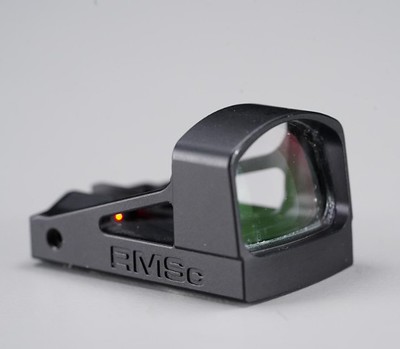
The Shield Sights RMSc is a very slim option that makes sense when concealment and minimal bulk matter most. For the Kimber Ultra Carry II, I like it because it preserves the compact feel of the pistol better than many larger optics.
- Ultra-compact reflex sight
- Slim RMSc-style footprint
- Lightweight construction
- Carry-focused design
- Low-profile window
Pros
- Very slim and lightweight
- Excellent for deep concealment
- Natural fit for compact pistols
- Minimal bulk on the slide
Cons
- Smaller window
- Less rugged-feeling than heavier-duty optics
- Mounting still requires the correct cut or plate
My personal experience with RMSc-sized optics is that they carry beautifully. The tradeoff is that the smaller window demands a consistent draw stroke. On the Kimber, I see this as a good fit for experienced shooters who already present the pistol cleanly.
Customer feedback often praises the RMSc for its size, low weight, and concealability. Less positive comments usually mention the smaller viewing window and the need to match the correct mounting system.
For the Kimber Ultra Carry II, the RMSc usually requires slide milling or an RMSc-compatible adapter plate. It is not a direct-mount optic for a standard uncut slide.
➤➤➤ Click Here to Check Price on Amazon
➤➤➤ Click Here to Check Price on OpticsPlanet
➤➤➤ Click Here to Check Price on EuroOptic
Vortex Defender CCW
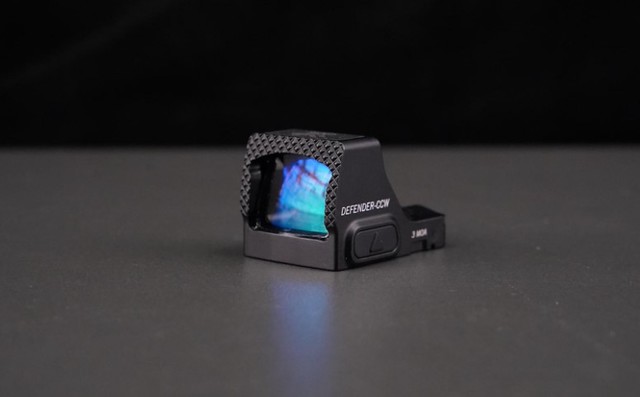
The Vortex Defender CCW is a practical concealed-carry optic with user-friendly controls and a compact body. I like it for shooters who want a recognizable brand, easy handling, and a carry-ready size.
- Compact open-emitter red dot
- Designed for concealed carry pistols
- Textured front face
- Multiple brightness settings
- Durable compact housing
Pros
- Easy to use
- Good carry size
- Strong warranty reputation
- Practical control layout
Cons
- Open emitter needs cleaning
- Not as proven as the RMRcc
- Mounting must be confirmed before installation
My personal experience with Vortex carry optics is that they are approachable. The Defender CCW feels like a good option for someone adding a dot to a Kimber Ultra Carry II for the first time because the controls are simple and the optic does not overwhelm the pistol.
Online customer feedback often mentions ease of use, value, and warranty confidence. Some users pay close attention to mounting hardware and plate compatibility, which is especially important on compact pistols.
On a Kimber Ultra Carry II, the Defender CCW generally requires a compatible slide cut or adapter plate. It does not directly attach to an uncut standard slide.
➤➤➤ Click Here to Check Price on Amazon
➤➤➤ Click Here to Check Price on OpticsPlanet
➤➤➤ Click Here to Check Price on EuroOptic
How to Choose the Right Red Dot Sight
For the Kimber Ultra Carry II, I start with size. This pistol is compact, so I avoid oversized optics that make the gun awkward to carry. A slim optic like the RMRcc, RMSc, 407K, 507K, EPS CARRY, or Defender CCW makes more sense than a large competition sight.
Next, I look at the mounting footprint. Most Kimber Ultra Carry II pistols will need professional milling or a plate system. I always confirm the footprint before buying because red dot compatibility is not universal.
For concealed carry, I also think about emitter design. Open-emitter sights are lighter and often lower-profile, but they can collect lint. Enclosed optics like the EPS CARRY are better for harsh carry conditions.
Dot size matters too. I prefer a clean defensive dot that is easy to see without covering too much of the target. If your presentation is still developing, a multi-reticle optic like the 507K can make dot acquisition easier.
Finally, I consider durability and support. A carry optic needs to survive sweat, recoil, holster contact, and daily handling. I would rather pay more for an optic I trust than save a little and doubt my setup.
FAQs
Can I mount a red dot directly on a Kimber Ultra Carry II?
Usually, no. A standard Kimber Ultra Carry II slide normally needs milling or an adapter plate before it can accept a red dot.
What is the best overall red dot for the Kimber Ultra Carry II?
My top overall choice is the Trijicon RMRcc because it is slim, rugged, and built around concealed carry.
Is an enclosed emitter worth it on a carry pistol?
Yes, especially if you carry daily. I like the HOLOSUN EPS CARRY because the enclosed design helps protect the emitter from lint and debris.
Which red dot is best for the money?
The HOLOSUN 407K-X2 is my value pick because it gives me a compact, dependable carry optic without unnecessary extras.
Will I need a new holster after adding a red dot?
Most likely, yes. A Kimber Ultra Carry II with an optic usually needs an optic-cut holster with clearance for the sight.
Conclusion
For the Kimber Ultra Carry II, I would choose the Trijicon RMRcc as the strongest overall red dot because it balances durability, size, and concealed-carry practicality better than anything else on this list. If I wanted an enclosed-emitter setup, I would go with the HOLOSUN EPS CARRY. For value, the HOLOSUN 407K-X2 is hard to ignore, while the HOLOSUN 507K is the better choice if you want reticle flexibility.